

In the Sierra Madre Oriental, nestled among mist-shrouded hills and humid tropical forests, lies the municipality of Pahuatlán, a territory that since pre-Hispanic times has been a passage and meeting point between the Valley of Mexico and the Gulf. Here, mestizos, Otomi, and Nahua peoples coexist, the latter primarily concentrated in four communities: Atla, Xolotla, Mamiquetla, and Atlantongo.
Xolotla, situated on the banks of the San Marcos River and guarded by the mountains, is one of the most populated and dynamic Nahua communities. Its inhabitants, bilingual in Nahuatl and Spanish, prefer to communicate in their native language, reinforcing a social fabric based on reciprocity: they marry within neighboring villages, collaborate on agricultural work, exchange goods, and celebrate together.
Life is organized around a symbolic geography where “up” and “down” are defined by the origin of the water that flows from sacred springs, whose “owner” is part of the collective memory (Monaghan, 1995).
The Xochihuilistli: Flowers as an Offering and a Sign of Respect
In this agricultural and spiritual setting, the feast day of Saint Isidore the Farmer, patron saint of farmers, is celebrated every May 15th. This festival, although part of the Catholic calendar, is steeped in pre-Hispanic meanings linked to the fertility of the land. Among its most important rituals is the Xochihuilistli, a ceremony in which crowns, necklaces, and the Xochimacpali are made. The Xochimacpali is a staff of flowers crafted from branches arranged in symbolic numbers (seven, representing the days of the week, and five, alluding to the fingers of the hand), offered as a sign of respect and purification.
The celebration is accompanied by huapango music, processions and agricultural dances such as the Acatlaxquis Dance, in which the protection of Chicomecóatl, the Mexica goddess of corn, was formerly invoked (Broda, 2004).
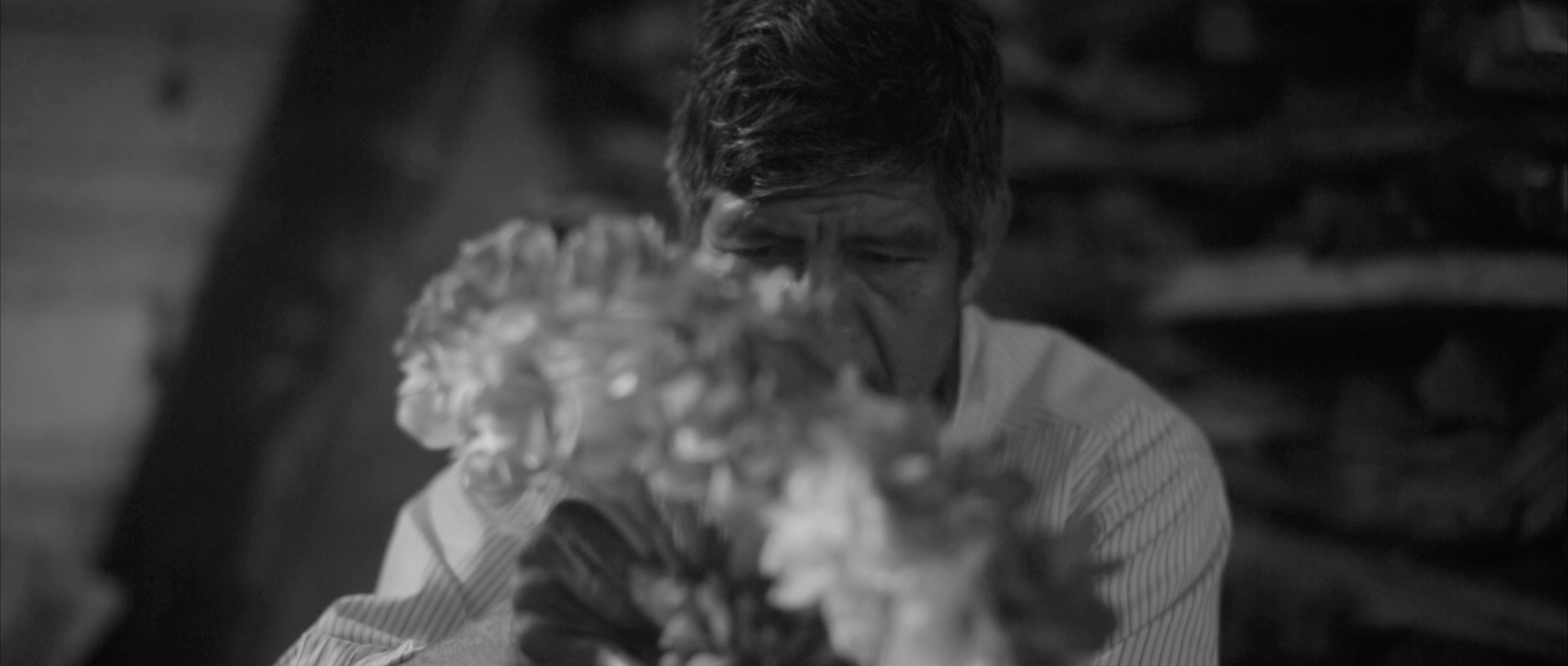
The flower offering, performed by local specialists, includes the burning of incense as a sign of purification, a gesture reminiscent of the ancient pre-Hispanic cleansing rituals described by Sahagún in the Florentine Codex. Although the ritual has incorporated Catholic elements, such as dedications to patron saints, it retains an indigenous foundation that connects flowers with life, fertility, and respect.
The Nahua worldview, present in these practices, conceives of nature as a space inhabited by “owners” (tlaloque, spirits of water; ehécatl, winds; and syncretized Catholic saints), as well as by the air, the dead, and nahuales (spirit guides).
These beings participate in daily life, influencing health, climate and harvest (Signorini & Lupo, 1989).
Therefore, honoring Saint Isidore is also about establishing a dialogue with these invisible guardians, asking for timely rains, fertile lands, and protection for the community. When the flower staff is passed from hand to hand, it renews a pact between generations, mountains, and springs; it confirms that agriculture is not merely work, but a network of sacred relationships that sustain life.
The Aesthetics of Devotion
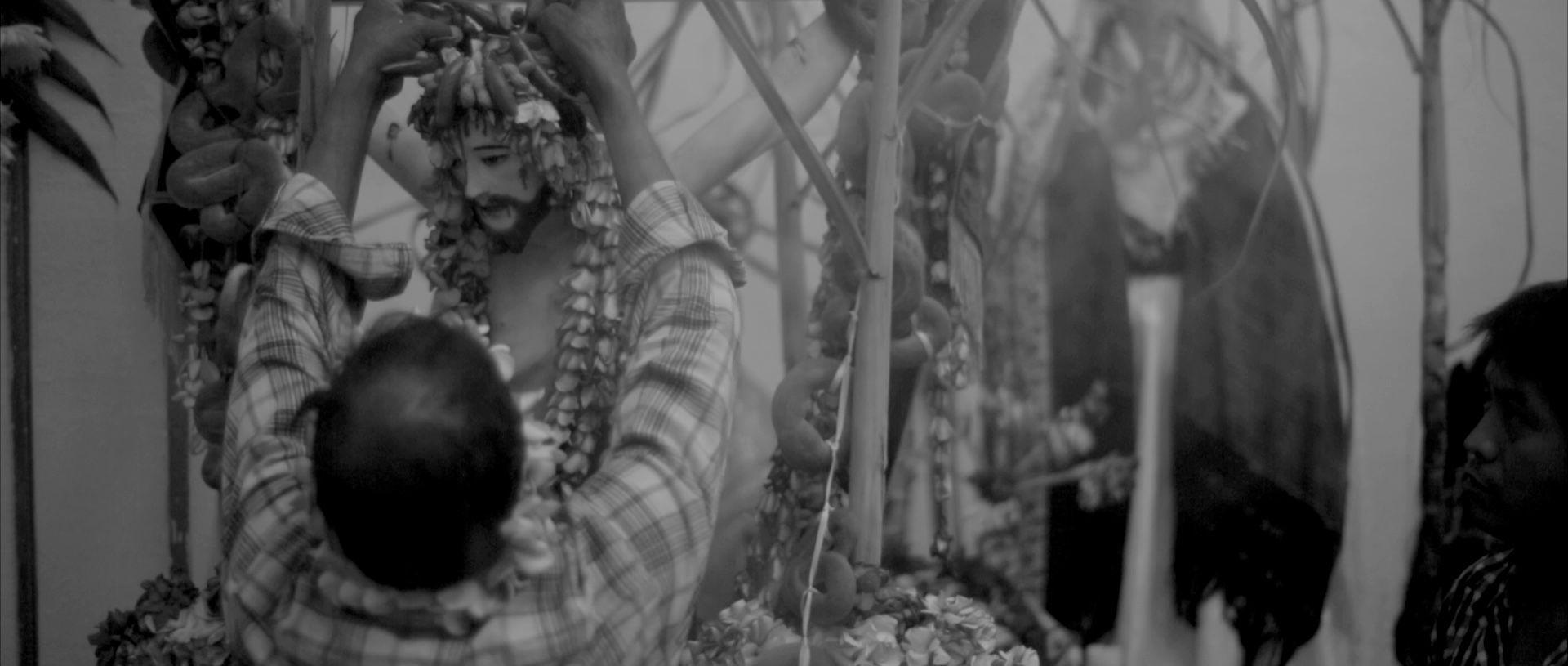
What distinguishes Xolotla from any other patron saint celebration is its astonishing tradition of flower adornments. While in other places the decorations are accessories, here they are the main attraction. The community’s artisans collect thousands of flowers—predominantly the cacalosúchil, or May flower—to weave kilometer-long garlands that seem to defy space.
Upon entering the church, one’s gaze is drawn upwards. The hanging flowers do not merely decorate; they reconstruct the architectural space. They form a roof beneath the roof, a network of organic geometry that envelops the faithful in a dense aroma of damp earth and sweet perfume. It is, literally, a “sky of flowers” that symbolizes divine protection over the fields.
Syncretism in Every Petal
Saint Isidore, the Madrid farmer who, according to legend, had the help of angels to plow while he prayed, found a perfect home in Xolotla. In this Nahuatl community, the figure of the saint merges with the Mesoamerican worldview.
Making these garlands is a ritual act of tequio (community work). It is not decoration, but a collective offering. Each strung flower is a prayer for rain, each knot in the garland is thanksgiving for the previous harvest. In Xolotla, faith is not spoken, it is woven.
A Living Heritage
While in the designated room of a house—usually that of the head steward—the men concentrate their skill on weaving the garlands, in the courtyard and in the communal kitchens, an equally intense rhythm beats. There, the women of Xolotla maintain the logistics of the faith. Their work is a choreography of strength and generosity: from the ritual sacrifice of pigs and turkeys—an act of profound respect that transforms raising animals into an offering—to the butchering and cooking over large, never-go fires. They are the architects of the flavor that will nourish the entire village; with hands weathered by smoke and corn, they prepare the communal feasts that transform devotion into an act of physical communion.
In Xolotla, the celebration is woven above with flowers, but it is rooted below, in the fire and the seasoning of the women.

Seeing Saint Isidore emerge in procession, surrounded by dancers like the Acatlaxquis—whose cane bows seem to mimic the movement of corn in the wind—the devotion that permeates the air inside the church during Mass, and later, amidst fireworks, “little bulls,” and the Dance of the Flyers, is to witness a heritage that resists the homogenization of the modern world.
Corpus Christi: Music, Processions, and Festive Hierarchies
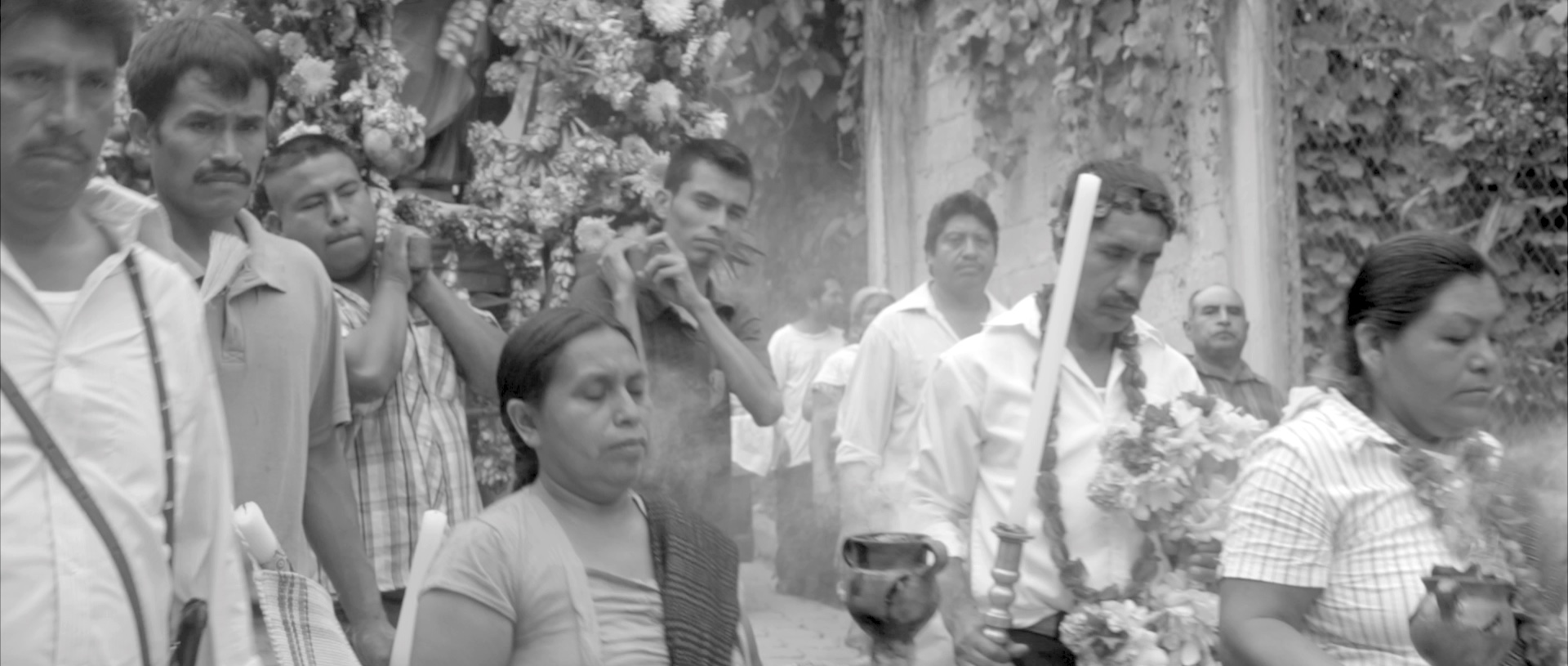
Although Saint Isidore’s Day marks the agricultural heart of the celebrations, they are intertwined with the Corpus Christi festivities at the end of May. On this occasion, the senior stewards and godparents of the saints make their first public appearance, accompanying the saint under their care.
On May 30, a Mass and procession with the Blessed Sacrament wind through the town, while the eve of the 29th marks the beginning of a festive cycle that symbolically extends into the following year.
“…these festive hierarchies are part of the system of offices, an indigenous organizational model that articulates community life, cooperation, and social prestige.” Warman (1980)
Xolotla Fair and Agricultural Dances
The town fair is also held in May, and agricultural dances, such as the Acatlaxquis Dance, are a highlight. Traditionally, this dance was performed from January 6th to December 24th, accompanying key moments in the agricultural calendar as well as healing rituals.
“The figure of the maringuilla, a child who carried medicinal plants and a snake —a symbol linked to Chicomecóatl, the Mexica goddess of corn—, reflects the continuity of pre-Hispanic agricultural symbols” (Broda, 2004).
Although some steps and melodies have been lost, their persistence serves as a reminder that dance, health, and the fertility of the land are inseparable dimensions of the indigenous worldview.
A celebration uniting the past and present
The feast of Saint Isidore the Farmer in Xolotla is more than a date on the liturgical calendar; it is a meeting point where the community reaffirms its connection to the land and its history. Every flower placed, every dance step, and every procession bears witness to a cultural heritage that resists oblivion, adapting to the times without losing its essence.
In Xolotla, honoring Saint Isidore is not only about praying for good harvests, but also about celebrating the collective memory of a people who, year after year, transform their faith into a landscape of music, color, and tradition.
Symbolism and Relevance
The rituals of planting and harvesting corn in Xolotla, along with the Xochihuilistli tradition, are a rich expression of the community’s cultural and spiritual identity. These rituals symbolize the relationship between humankind and the land, as well as the interdependence among community members.
The Xochihuilistli celebration reinforces the importance of corn not only as a crop, but as a central element in the worldview of the inhabitants of Xolotla. Through these traditions, ancestral knowledge is preserved and social cohesion is fostered, ensuring that cultural practices are passed on to future generations.
These practices not only ensure the community’s sustenance, but also celebrate its identity and its connection to the land. In an increasingly globalized world, preserving these traditions becomes essential to keeping cultural roots alive and strengthening the community, ensuring that the legacy of corn and the fertility of the land continue to be honored and celebrated.
The Xolotla festival reminds us that beauty is a form of resistance. In a world of plastic and haste, the village pauses to string flowers that will wither in a few days, reminding us of the ephemeral nature of life and the importance of renewing, year after year, our covenant with the earth that feeds us.
References
- Monaghan, J. (1995). The Covenants with Earth and Rain: Exchange, Sacrifice, and Revelation in Mixtec Sociality. University of Oklahoma Press.
- Broda, J. (2004). The Harvest Festival in Mesoamerica. UNAM.
- Signorini, I. & Lupo, A. (1989). The Three Axes of Life: Food, Kinship, and Religion in the Otomi-Tepehua Sierra. National Indigenous Institute.
- Sahagún, B. de (1975 [1569]). General History of the Things of New Spain. Mexico: Porrúa.
- Warman, A. (1980). …And we come to contradict. Mexico: SEP/Culture.


